Table of Contents
ToggleIntroduction
Running an online store is easier than ever, but attracting customers is becoming more competitive every day. Thousands of ecommerce websites are launched every month, making it challenging to stand out in search engine results. This is where Ecommerce SEO plays a crucial role.
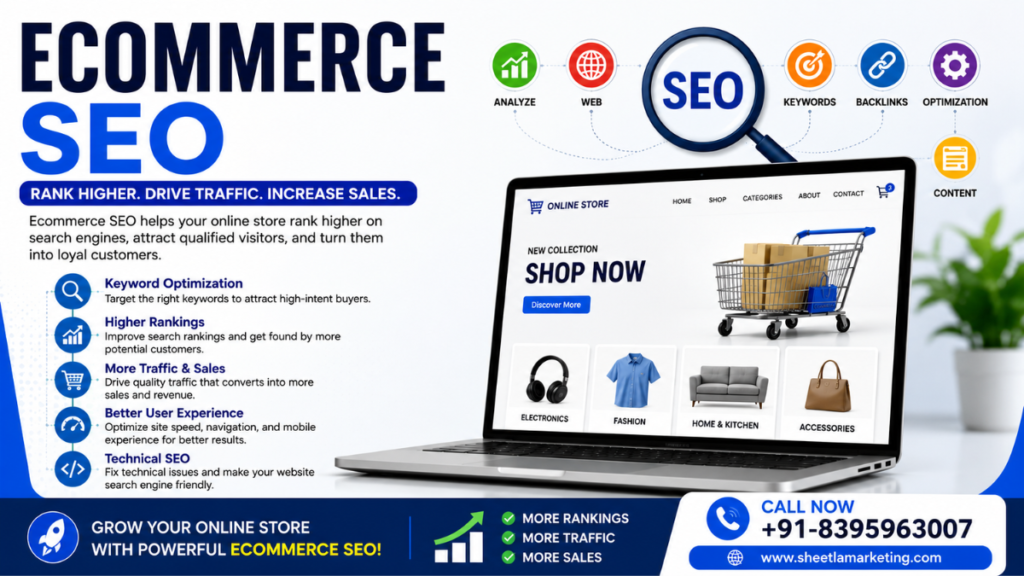
A well-planned Ecommerce SEO strategy helps your online store appear higher in Google search results, attract qualified visitors, and increase sales without relying solely on paid advertising. Whether you own a fashion store, electronics shop, furniture business, or any other ecommerce platform, investing in Ecommerce SEO can deliver long-term growth and sustainable revenue.
In this comprehensive guide, we’ll explore everything you need to know about Ecommerce SEO and how it can help your online business succeed.
What is Ecommerce SEO?
Ecommerce SEO is the process of optimizing an online store to improve its visibility in search engines such as Google, Bing, and Yahoo. The primary goal is to increase organic traffic and drive more potential customers to product pages, category pages, and other important sections of your website.
Unlike traditional SEO, Ecommerce SEO focuses specifically on online stores and includes optimizing:
- Product Pages
- Category Pages
- Product Descriptions
- Images
- Site Structure
- User Experience
- Internal Linking
- Technical SEO
When implemented correctly, Ecommerce SEO helps customers find your products exactly when they are searching for them.
Why Ecommerce SEO Matters for Online Businesses
Many online businesses spend large budgets on paid advertising. While ads can generate quick traffic, they stop delivering results once the budget is exhausted.
Ecommerce SEO provides long-term benefits, including:
Increased Organic Traffic
Ranking higher on Google allows potential customers to discover your products naturally.
Better Conversion Rates
Organic visitors often have stronger buying intent compared to social media traffic.
Reduced Marketing Costs
Strong rankings can significantly reduce dependence on paid advertising.
Improved Brand Trust
Users tend to trust websites appearing on the first page of Google.
Sustainable Growth
Unlike paid campaigns, SEO continues generating traffic over time.
Key Components of Ecommerce SEO
Keyword Research
Keyword research forms the foundation of Ecommerce SEO.
Focus on:
- Product Keywords
- Category Keywords
- Long-Tail Keywords
- Transactional Keywords
- Buyer Intent Keywords
Examples:
- Buy running shoes online
- Best gaming laptop under ₹50000
- Organic skincare products online
Understanding customer search behavior helps optimize pages effectively.
Product Page Optimization
Product pages are among the most important assets of an ecommerce website.
Optimize:
- Product Titles
- Meta Descriptions
- Product Descriptions
- Product Images
- URLs
- Customer Reviews
Avoid using duplicate manufacturer descriptions. Create unique and engaging content for every product.
Category Page SEO
Many ecommerce websites overlook category pages.
A strong category page should include:
- Keyword-rich content
- Clear navigation
- Optimized meta tags
- Internal linking
- Product filtering options
Category pages often attract substantial organic traffic when properly optimized.
Technical Ecommerce SEO
Technical SEO ensures search engines can efficiently crawl and index your website.
Important factors include:
Website Speed
Fast-loading websites improve rankings and user experience.
Mobile Optimization
Most ecommerce traffic now comes from mobile devices.
Secure Website (HTTPS)
Security is essential for customer trust and SEO performance.
XML Sitemap
Helps search engines discover important pages.
Schema Markup
Product schema can display rich snippets including prices, ratings, and availability.
Content Marketing for Ecommerce SEO
Content marketing supports Ecommerce SEO by attracting visitors at different stages of the buying journey.
Effective content ideas include:
- Buying Guides
- Product Comparisons
- Industry Trends
- How-To Articles
- Product Reviews
- FAQs
For example:
If you sell fitness equipment, create articles like:
- Best Home Gym Equipment for Beginners
- How to Choose the Right Treadmill
- Benefits of Strength Training at Home
This strategy attracts informational searches and converts readers into customers.
Image Optimization
Images significantly influence ecommerce performance.
Best practices:
- Use descriptive filenames
- Add keyword-focused alt text
- Compress images
- Use modern formats like WebP
- Enable lazy loading
Optimized images improve rankings and page speed.
Internal Linking Strategy
Internal linking helps search engines understand your website structure.
Link:
- Product Pages
- Category Pages
- Related Products
- Blog Articles
A strong internal linking strategy distributes authority across important pages and improves crawlability.
Common Ecommerce SEO Mistakes to Avoid
Many businesses struggle because of these mistakes:
- Duplicate product descriptions
- Slow website speed
- Poor mobile experience
- Broken links
- Thin content
- Missing meta tags
- Poor URL structure
- Ignoring technical SEO
- Lack of content marketing
Avoiding these issues can significantly improve rankings and sales.
Benefits of Hiring an Ecommerce SEO Agency
Managing Ecommerce SEO requires expertise, tools, and continuous optimization.
A professional agency can help with:
- Advanced Keyword Research
- Competitor Analysis
- Technical SEO Audits
- Content Creation
- Link Building
- Conversion Optimization
- Performance Monitoring
This allows business owners to focus on growth while SEO experts handle optimization.
Future of Ecommerce SEO in 2026
Search engines continue evolving with AI and machine learning.
Future Ecommerce SEO trends include:
- AI-powered search optimization
- Voice search optimization
- Visual search
- User experience signals
- Core Web Vitals
- Personalized search results
Businesses that adapt early will gain a competitive advantage.
Conclusion
Ecommerce SEO is no longer optional for online businesses. It is one of the most effective ways to increase visibility, attract qualified traffic, and generate consistent sales.
From keyword research and technical optimization to content marketing and user experience improvements, every aspect of Ecommerce SEO contributes to long-term success.
If you want your ecommerce store to rank higher on Google, attract more customers, and increase revenue, now is the perfect time to invest in a professional Ecommerce SEO strategy.
Call To Action
Ready to grow your online store with expert Ecommerce SEO services?
🌐 Visit: www.sheetlamarketing.com
📞 Call Now: +91-8395963007
Our team can help your ecommerce business achieve higher rankings, increased traffic, and better sales results.
Frequently Asked Questions (FAQs)
1. What is Ecommerce SEO?
Ecommerce SEO is the process of optimizing an online store to improve its visibility in search engines and attract organic traffic.
2. Why is Ecommerce SEO important?
It helps increase website traffic, improve conversions, reduce advertising costs, and generate long-term business growth.
3. How long does Ecommerce SEO take to show results?
Most businesses start seeing noticeable improvements within 3 to 6 months, depending on competition and website condition.
4. Is Ecommerce SEO better than paid advertising?
Both strategies have benefits. SEO provides long-term organic growth, while paid advertising delivers immediate traffic.
5. What are the most important Ecommerce SEO factors?
Key factors include keyword optimization, technical SEO, website speed, mobile responsiveness, content quality, and backlink profile.
6. Can small ecommerce businesses benefit from Ecommerce SEO?
Yes. Ecommerce SEO is especially beneficial for small businesses looking to compete with larger brands without spending heavily on advertising.
7. How often should Ecommerce SEO be updated?
SEO should be monitored continuously, with regular updates to content, technical elements, and optimization strategies.
8. Why should I hire an Ecommerce SEO agency?
An experienced agency can implement proven strategies, monitor performance, and help achieve faster and more sustainable results.